
Dezawa MuseCells® Therapy for Facet Joint Arthritis, Back Pain, and Avoiding Nerve Burning Procedures
Your back pain is constant and localized.
The pain sits deep in your lower back or neck—right along your spine. It worsens when you arch backward or twist. Standing too long makes it unbearable. Sitting provides some relief but you can’t sit forever. The pain radiates into your buttocks, maybe down your thighs, but it’s different from sciatica—this pain stays closer to your spine.
Your doctor diagnosed facet joint syndrome—arthritis in the small joints of your spine. They offered facet joint injections providing 3-6 months relief. When those stopped working, they mentioned radiofrequency ablation—burning the nerves so you can’t feel the pain. Eventually, they say, you might need spinal fusion surgery eliminating motion in that segment.
What if you could actually heal the inflamed facet joints instead of burning nerves or fusing vertebrae?
At RejuvStem in Cancun, Mexico, we provide Dezawa MuseCells® therapy for facet joint syndrome—regenerative treatment reducing joint inflammation, supporting cartilage health, and providing lasting pain relief without nerve destruction or fusion surgery.
For facet joint syndrome patients facing repeated injections, nerve ablation, or fusion surgery, regenerative medicine in Cancun offers joint healing and pain elimination.
Contact Musecell Procedure to discuss facet joint syndrome treatment.
Why Facet Joint Syndrome Patients Choose Muse Cell Procedure – USA
- Dramatically cut spinal pain – Target inflammation at the joint level
- Skip nerve‑ablation tricks – Heal the joint instead of burning nerves
- Keep your spine moving – Avoid fusion and preserve natural motion
- Years‑long comfort – Relief that lasts for years, not just months with injections
- Return to daily life – Regain pain‑free mobility
- Cool inflammatory triggers – Calm arthritic facets
- Restore joint health – Rebuild damaged cartilage
- MuseCell Innovations® Partner – Pharmaceutical‑grade cells in every dose
- COFEPRIS‑Certified – Medical‑grade facility and oversight
Understanding Facet Joint Syndrome
The Spinal Joint Issue
According to the North American Spine Society, facet joint pain accounts for 15 – 45 % of chronic low‑back and neck discomfort worldwide.
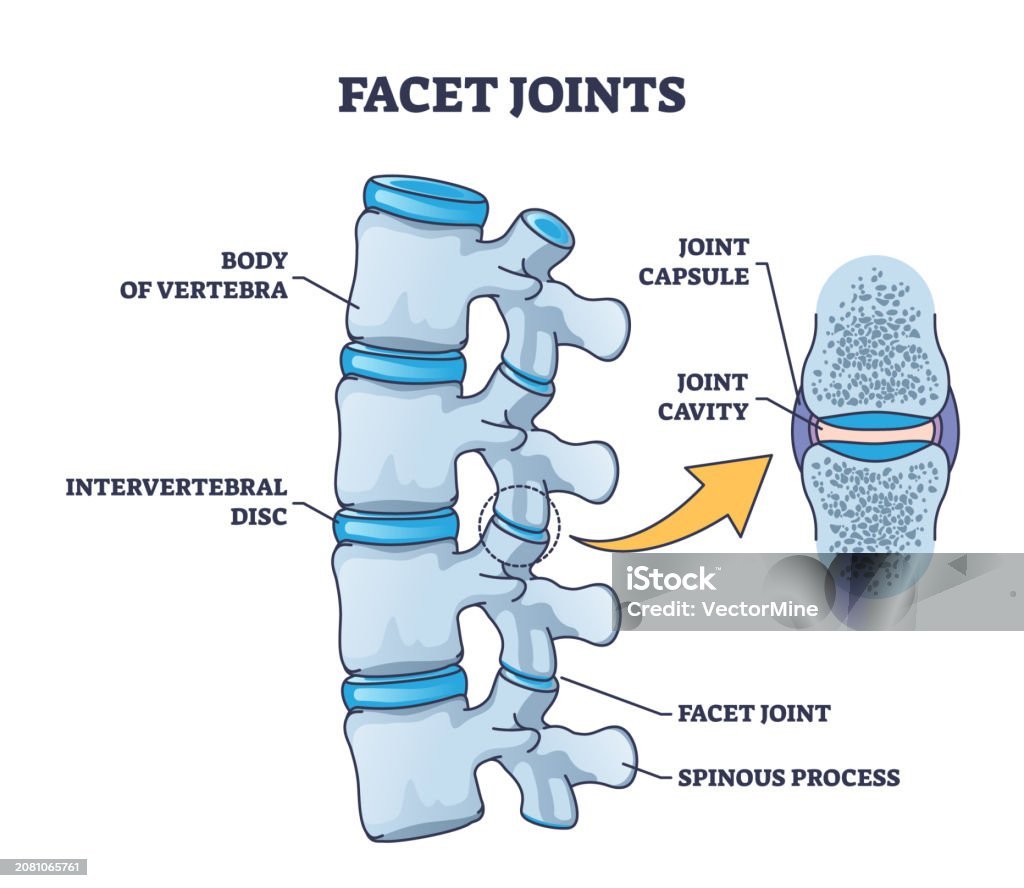
Facet joints are tiny articulations that sit between adjacent vertebrae on either side of the spine. They provide stability while allowing flexion, extension, and rotation. Like other synovial joints, facets are covered by cartilage and lubricated with fluid; when injury, arthritis or degeneration strikes, these structures become inflamed and painful.
Facet joint syndrome (also called facet arthropathy) occurs when inflammation, wear‑and‑tear or damage to the facet joint surfaces produces localized pain. Unlike disc pathology that often radiates along a nerve root, facet pain tends to stay closer to the spine with referred discomfort in nearby tissues.
Pain patterns by spinal level
| Spinal segment | Typical symptoms |
|---|---|
| Cervical facets (neck) | Neck stiffness, shoulder/upper‑back ache, base‑of‑skull headaches, pain when looking up or rotating the head |
| Thoracic facets (mid‑back) | Pain between the shoulder blades, rib discomfort, soreness with torso twisting |
| Lumbar facets (low back) | Lower‑back ache (most common), referral to buttocks and hips, mild thigh discomfort above the knee, pain with extension or rotation |
What it feels like
- Deep, dull aching in the spine
- Tenderness directly over the involved joint(s)
- Exacerbation with backward bending or twisting
- Relief when flexing forward or sitting upright
- Morning stiffness and difficulty staying still for long periods
Functional impact
- Standing or walking becomes painful after a while
- Difficulty reaching overhead (especially in the cervical region)
- Trouble rising from chairs or bedding, disturbing sleep
- Limited spinal range of motion and reduced quality of life
What makes it happen
| Category | Typical trigger |
|---|---|
| Degenerative change | Age‑related cartilage loss, arthritis, bone spur formation, narrowing of joint space |
| Acute injury | Whiplash in the neck, sports trauma, falls or repetitive stress |
| Spinal instability | Disc collapse, spondylolisthesis (vertebra slips), post‑surgical alterations |
| Biomechanical factors | Poor posture, muscle imbalances, abnormal spinal mechanics, obesity increasing load |
The dark side
- Chronic debilitating pain that resists routine meds
- Progressive loss of mobility and function
- Potential opioid dependence for pain control
- Depression, sleep disturbances, lost work days, and a high risk for progressive arthritis requiring invasive interventions
Facet joint syndrome is a major contributor to reduced independence and life satisfaction.
Why Facet Joints Degenerate
| Mechanism | What Happens |
|---|---|
| Cartilage wear | Like other joints, the cartilage on facet surfaces thins, cracks, and becomes rough; inflammatory molecules gather in the joint. |
| Chronic inflammation | Cytokines accumulate, fueling pain and accelerating tissue loss. |
| Mechanical overload | Facets bear heavy loads, especially when the spine is extended or twisted; repetitive stress hastens wear. |
| Limited blood supply | Cartilage is poorly vascularized, which hampers natural repair processes. |
| Disc degeneration | Loss of disc height shifts extra force onto the facets, accelerating arthritis. |
These factors create a self‑reinforcing cycle of pain and joint loss.
💡 Quick Fact: Research shows that about 40 % of people over 60 with chronic low‑back pain experience facet‑joint involvement; many also have concurrent disc problems.
Conventional Treatment Limitations
| Approach | What it offers | Why it falls short |
|---|---|---|
| NSAIDs & pain meds | Temporary relief, no joint repair | Do not address the underlying inflammation or degeneration |
| Physical therapy | Improves strength and flexibility | Limited in reversing arthritic changes |
| Facet injections (steroid + anesthetic) | 3‑6 month relief on average | Repeated doses can erode cartilage; no permanent solution |
| Medial branch blocks | Diagnostic/temporary numbness | Only provides short‑term comfort |
| Radiofrequency ablation (RFA) | Burns nerves to block pain signals | Nerve regeneration reintroduces pain after 6–12 months; joints still arthritic |
| Spinal fusion surgery | Eliminates painful facet motion | Removes motion entirely, increases stress on adjacent levels, risks infection and hardware failure |
These modalities may mask the discomfort but never heal the joint or slow its deterioration.
How Dezawa MuseCells® Heal Facet Joints
1. Reduce Joint Inflammation
MuseCells secrete potent anti‑inflammatory cytokines that calm facet inflammation.
- Lower levels of IL‑1 and TNF‑α
- Diminish synovial swelling
- Create a conducive environment for tissue repair
- Alleviate pain driven by chronic inflammation
Result: Immediate and sustained pain reduction, smoother joint function.
2. Support Cartilage Regeneration
Stem cells can drive new cartilage formation in arthritic facets.
- Stimulate chondrocyte activity and matrix production
- Decrease enzymes that break down cartilage
- Promote limited but meaningful regeneration of the joint surface
- Improve overall joint health
Result: Healthier cartilage, slower progression to full‑blown arthritis.
3. Enhance Blood Flow
Angiogenic factors from MuseCells encourage new vessel growth around the facet joint.
- Increase oxygen and nutrient delivery
- Support metabolic activity in joint tissues
- Facilitate removal of waste products
- Accelerate healing of inflamed structures
Result: Better‑nourished joints, improved function.
4. Modulate Pain Signaling
Unlike nerve ablation, MuseCells heal the tissue that is causing pain and gently adjust how nerves transmit signals.
- Heal damaged joint tissues that trigger nociceptors
- Reduce inflammation‑driven sensitization of peripheral nerves
- Normalize pain pathways while preserving sensation
- Restore natural joint mechanics
Result: Long‑lasting relief without loss of nerve function.
5. Prevent Progressive Degeneration
By calming inflammation and encouraging cartilage growth, the therapy slows further deterioration.
- Protect existing cartilage from ongoing wear
- Lower the rate at which the joint degrades
- Extend the functional lifespan of the spine
- Reduce the likelihood of needing invasive surgery later
Result: Long‑term preservation of spinal health.
6. Restore Spinal Function
As pain diminishes and tissue improves, normal motion returns.
- Expanded range of motion in flexion, extension, and rotation
- Less stiffness and tighter muscle response
- Greater tolerance to everyday activities such as standing, walking, or lifting
- Re‑establishment of a pain‑free spine
Result: A fully functional, mobile back and neck that supports active living.
Bottom line
Dezawa MuseCells® target the root causes of facet joint syndrome—chronic inflammation, cartilage loss, and poor blood supply—providing a regenerative solution that heals the joint itself. With Muse Cell Procedure, patients gain years‑long relief, preserved motion, and a renewed sense of freedom from back pain.