
Dezawa MuseCells® Therapy for Herniated Discs, Sciatica, and Avoiding Spinal Surgery
The pain shoots down your leg like electricity.
Your MRI shows bulging discs—L4-L5 and L5-S1 pressing on nerve roots. The pain radiates from your lower back down through your buttock, thigh, calf—sometimes reaching your foot. Numbness and tingling follow the same path. Some days you can barely walk. Sitting makes it worse. Standing too long is unbearable.
Your spine surgeon reviewed the images. Conservative treatment failed—physical therapy, medications, injections provided temporary relief at best. Now they recommend surgery: discectomy removing the bulging portion, maybe fusion eliminating motion between those vertebrae. Six weeks recovery minimum. Risk of complications. No guarantee of success. Adjacent segment disease likely within years.
What if your disc could heal without cutting into your spine?
At Muse Cell Procedure, we provide Dezawa MuseCells® therapy for bulging and herniated discs—regenerative treatment reducing disc inflammation, supporting tissue repair, and potentially avoiding surgery that permanently alters your spine.
For disc herniation patients facing surgery or living with chronic sciatica, regenerative medicine in Cancun offers disc healing and nerve pain elimination.
Contact Musecell Procedure to discuss bulging disc treatment.
Why Bulging‑Disc Patients Choose Muse Cell Procedure, – USA
- Avoid Spine Surgery – Non‑surgical disc healing
- Eliminate Sciatica – Resolve nerve‑compression pain
- Reduce Disc Inflammation – Calm swollen disc tissue
- Support Disc Repair – Promote annulus healing
- Restore Function – Regain pain‑free movement
- Prevent Fusion – Preserve spinal motion
- Long‑Lasting Relief – Years, not months
- MuseCell Innovations® Partner – Pharmaceutical‑grade cells
- COFEPRIS‑Certified – Medical‑grade Florida facility
Understanding Bulging and Herniated Discs
The Spinal Cushion Problem
According to the American Academy of Orthopaedic Surgeons, disc problems are among the most common causes of back and leg pain—affecting millions annually with roughly 3 million new herniated‑disc cases per year in the United States.
What are intervertebral discs?
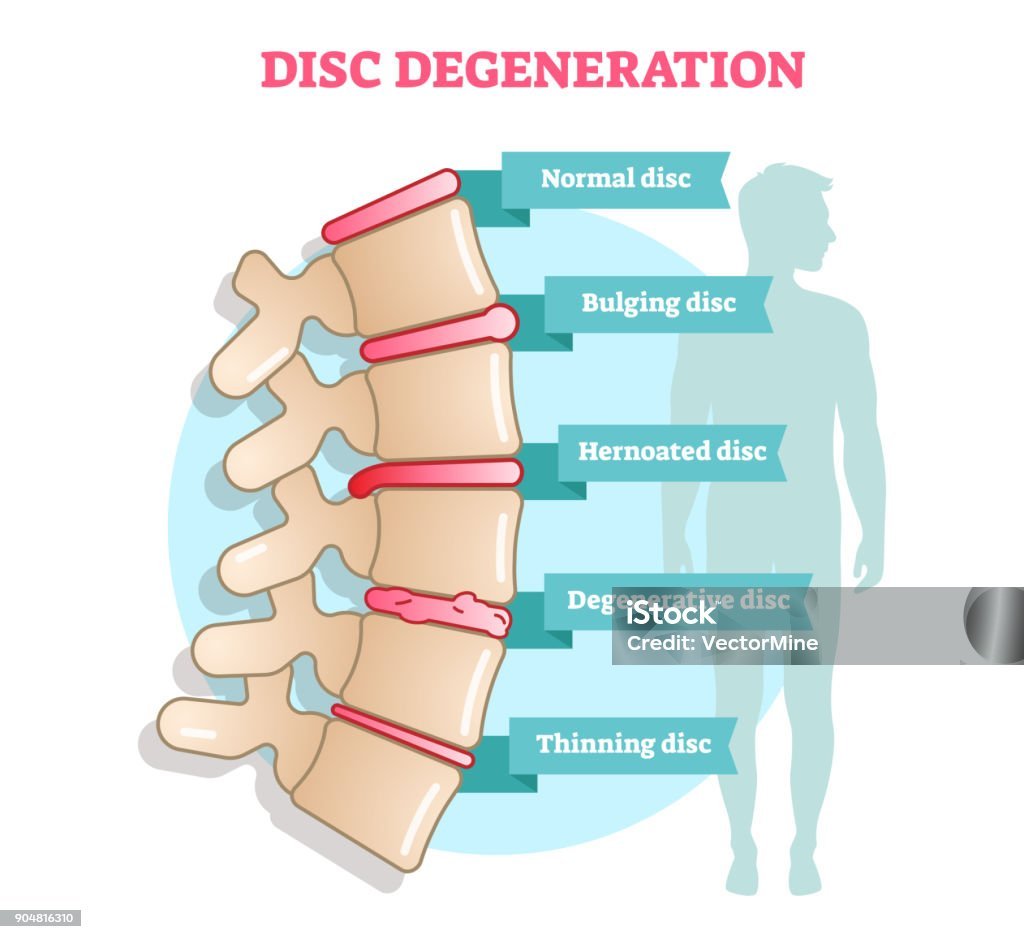
Discs are fibrocartilage cushions between vertebrae that act as shock absorbers and allow spinal flexibility. Each disc has two parts: a tough outer ring (annulus fibrosus) made of concentric collagen layers, and a gel‑like centre (nucleus pulposus) providing cushioning. Injury, degeneration, or excess stress can cause discs to bulge, herniate, or rupture.
Disc terminology explained
| Term | Definition |
|---|---|
| Bulging disc | Disc extends beyond normal boundaries; annulus fibrosus intact (outer ring not torn); usually affects a larger portion of the disc circumference; may or may not cause symptoms; common with ageing. |
| Herniated disc(slipped/ruptured) | Annulus fibrosus tears; nucleus pulposus material extrudes through tear; typically smaller focal area; more likely to compress nerves; causes more severe symptoms. |
| Protruding disc | Disc bulges focally in one area; intermediate between bulge and herniation; annulus weakened but not fully torn. |
| Extruded disc | Nucleus pulposus breaks through annulus; material extends outside disc space; severe herniation; often surgical consideration. |
| Sequestered disc | Fragment breaks free from main disc, migrates away; most severe type; usually requires surgery. |
Common locations
- Lumbar spine (lower back) – L4‑L5 (most common), L5‑S1 (second most common), L3‑L4 (less common); causes sciatica.
- Cervical spine (neck) – C5‑C6 (most common), C6‑C7, C4‑C5; causes arm pain and numbness.
- Thoracic spine (mid‑back) – Uncommon due to rib stability; can cause chest/abdominal pain.
Symptoms by location
| Location | Typical symptoms |
|---|---|
| Lumbar disc herniation | Lower back pain, sciatica, numbness/tingling down leg, foot drop or weakness, loss of reflexes, bladder/bowel dysfunction (emergency). |
| Cervical disc herniation | Neck pain, shoulder and arm pain, hand numbness/tingling, arm weakness, loss of grip strength, coordination problems. |
Causes
- Degeneration – Age‑related desiccation, reduced nucleus pulposus hydration, annulus weakening with micro‑tears, decreased shock absorption.
- Injury – Heavy lifting with poor technique, sudden twisting, falls or trauma, repetitive bending/lifting, sports injuries.
- Risk factors – Obesity (increased load), poor posture, smoking (reduces disc nutrition), genetics, occupational stress (drivers, laborers), sedentary lifestyle (weak core).
Serious complications
- Chronic debilitating pain
- Progressive neurological deficits
- Permanent nerve damage
- Cauda equina syndrome (emergency)
- Disability and lost work
- Opioid dependence
- Need for surgical intervention
Disc problems severely impair quality of life and function.
Why Discs Don’t Heal Naturally
Healing barriers
| Barrier | Explanation |
|---|---|
| Poor vascular supply | Adult discs are largely avascular; blood vessels penetrate only outer annulus edges. Nucleus pulposus relies solely on diffusion, limiting healing capacity. |
| Mechanical stress | Constant compression and motion prevent a stable healing environment; even minor movements stress injured discs. |
| Inflammatory cascade | Nucleus pulposus material is immunogenic; when it contacts nerves and surrounding tissues, it triggers intense inflammation that irritates nerves and amplifies pain beyond mechanical compression. |
| Progressive degeneration | Once disc degenerates or herniates, accelerated breakdown often continues—disc loses height, adjacent segments are overstressed, creating a cascade of spinal problems. |
These factors make natural disc healing extremely difficult.
💡 Quick Fact – Research shows approximately 90 % of disc herniations occur at the L4‑L5 or L5‑S1 levels—the most mechanically stressed segments during bending, lifting, and twisting.
Conventional Treatment Limitations
Conservative to invasive
| Approach | Details |
|---|---|
| Conservative (first 6–12 weeks) | Rest, activity modification; NSAIDs and pain meds; physical therapy & core strengthening; heat/ice; chiropractic manipulation. Works for 80‑90 % eventually but slowly. |
| Epidural steroid injections | Corticosteroid injected around compressed nerve; reduces inflammation temporarily (3–6 months relief on average); does not heal disc; repeated injections may weaken tissues; diminishing returns. |
| Surgical interventions | Microdiscectomy – remove herniated portion, 6‑8 week recovery, 5‑15 % recurrence, doesn’t address degeneration. Laminectomy – remove bone to decompress nerve; more invasive than discectomy; longer recovery; may destabilize spine. Spinal fusion – removes disc entirely, fuses adjacent vertebrae with graft/hardware; major surgery (3‑6 month recovery), eliminates motion permanently; adjacent segment disease common (15‑20 % within 10 years); hardware complications possible. Artificial disc replacement – preserves motion but limited long‑term data, expensive, revision difficult. |
These treatments provide symptom relief or remove problem tissue—none heal the damaged disc or restore natural function.
How Dezawa MuseCells® Heal Discs
Disc Regeneration and Inflammation Reduction
1. Reduce Disc Inflammation
Dezawa MuseCells® release powerful anti‑inflammatory cytokines, lowering inflammation around a herniated disc and compressed nerves.
- Lower inflammatory cytokines
- Reduce nerve‑root inflammation
- Calm surrounding tissue swelling
- Decrease nucleus pulposus immunogenicity
- Relieve compression effects
Result: Dramatic pain reduction and improved function.
2. Support Annulus Repair
Stem cells can aid annulus fibrosus healing.
- Stimulate fibroblast activity
- Promote collagen synthesis
- Encourage organized fiber alignment
- Strengthen outer disc ring
- Prevent further herniation
Result: Disc is contained; nerve compression reduced.
3. Hydrate Nucleus Pulposus
Stem‑cell factors help maintain nucleus pulposus cell viability and proteoglycan synthesis.
- Support nucleus pulposus cells
- Enhance water‑binding capacity
- Restore disc height
- Improve shock absorption
Result: Better disc function, less mechanical pain.
4. Promote Tissue Healing
Stem cells support healing beyond the disc—ligaments, muscles, facet joints affected by disc pathology.
- Aid ligament repair
- Reduce muscle spasm
- Calm facet joint inflammation
- Restore normal biomechanics
Result: Comprehensive spinal recovery.
5. Modulate Pain Signaling
By healing tissues and acting on nerves, stem cells reduce pain signaling pathways.
- Heal painful tissues
- Lower nerve sensitization
- Modulate central pain processing
- Restore normal nerve function
Result: Sciatica and radicular pain eliminated.
6. Prevent Progressive Degeneration
Reducing inflammation and supporting repair slows disc degeneration.
- Slow the degenerative cascade
- Protect adjacent segments
- Preserve disc function longer
- Delay or avoid surgery
Result: Better long‑term spinal health.